



Quick Links

- Skin Cancer Treatment Options
- The Pros and Cons of Both Mohs Surgery and GentleCure™ SRT Treatment Options
- Basal Cell Carcinoma Explained
- Understanding Squamous Cell Cancer
- Melanoma and Its Risks
- Treating Basal Cell Carcinoma
- Options for Squamous Cell Carcinoma
- Melanoma Treatment Strategies
- Frequently Asked Questions on Melanoma
Skin cancer is one of the most common types of cancer, affecting millions of people across the globe each year. Understanding the various types, including basal cell carcinoma, squamous cell carcinoma, and melanoma, is crucial for both prevention and early detection. Each type of skin cancer presents unique characteristics and requires specific attention to treatment options to ensure the best outcomes. Whether you’re a concerned parent, a young adult, or someone with aging skin, being informed about skin cancer can empower you to make proactive health decisions. In this guide, we will explore the various forms of skin cancer and offer guidance on recognizing symptoms and seeking timely medical attention.

Skin cancer manifests in various forms, each with distinct characteristics and levels of severity. This section explores the three main types of skin cancer: basal cell carcinoma, squamous cell carcinoma, and melanoma.
Basal Cell Carcinoma Explained
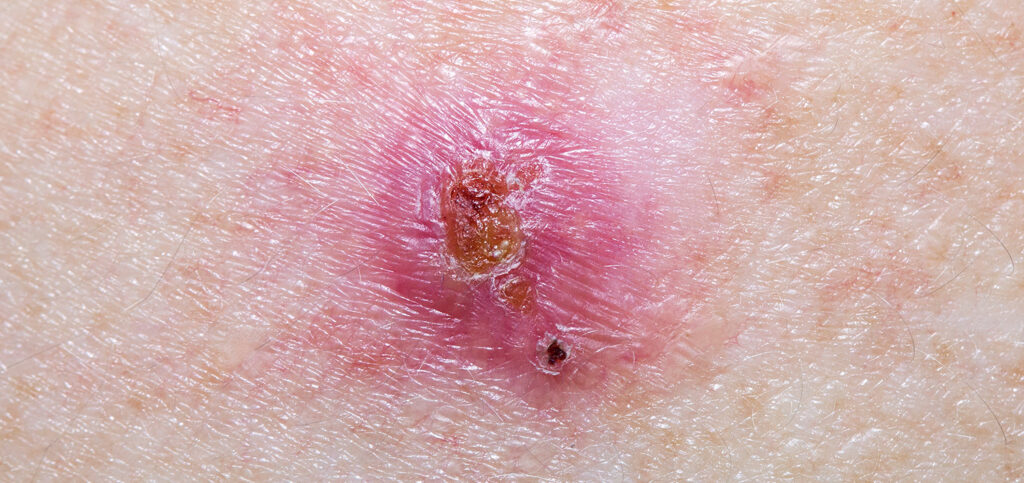
Basal cell carcinoma (BCC) is the most common form of skin cancer. It develops in the basal cells, which are found in the lower part of the epidermis.
BCC typically appears as a small, shiny bump or a flat, scaly patch on areas of the skin frequently exposed to the sun. While it rarely spreads to other parts of the body, it can grow deep into the skin and bone if left untreated.
Early detection is crucial for successful treatment. Regular skin checks and protection from UV radiation are key preventive measures.
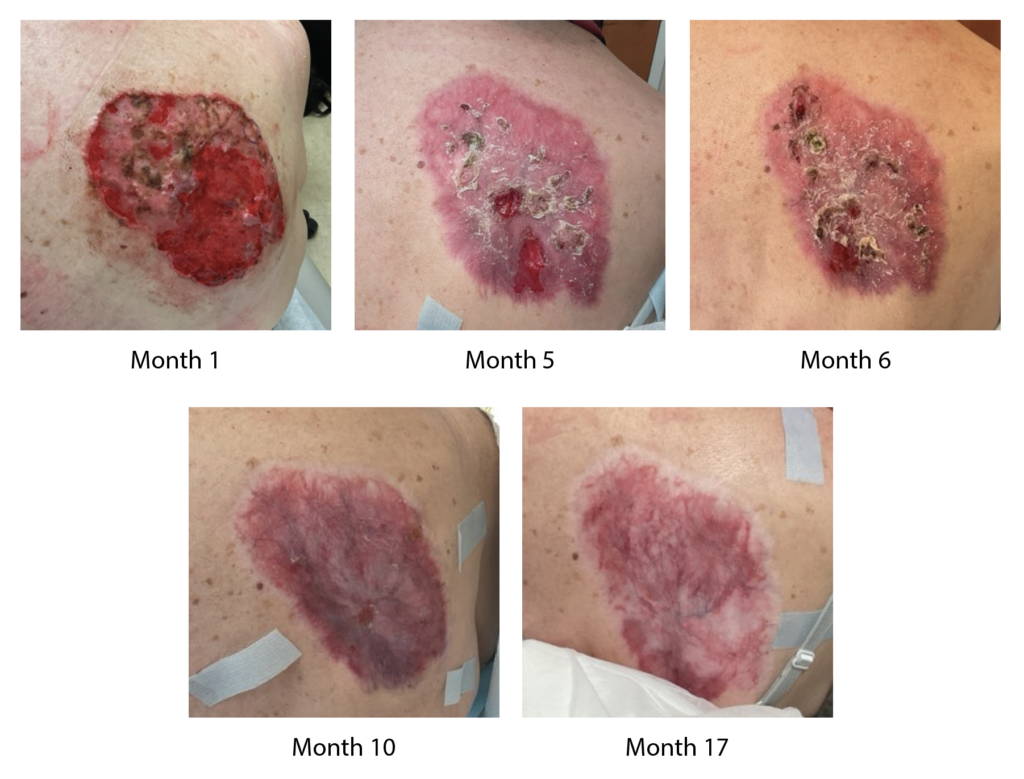
The photos below show a large Basal Cell Carcinoma on a patient’s shoulder and the treatment progression over 17 months.
Understanding Squamous Cell Cancer

Squamous cell carcinoma (SCC) is the second most common type of skin cancer. It originates in the squamous cells, which make up the middle and outer layers of the skin.
SCC often appears as a firm, red nodule or a flat lesion with a scaly, crusted surface. Unlike BCC, SCC has a higher risk of spreading to other parts of the body if not treated promptly.
People with fair skin, a history of sunburns, or prolonged sun exposure are at higher risk for developing SCC. Regular use of sunscreen and protective clothing can significantly reduce the risk of this cancer type.
Melanoma and Its Risks
Melanoma is the most serious form of skin cancer. It develops in the melanocytes, the cells that produce melanin, which gives skin its color.

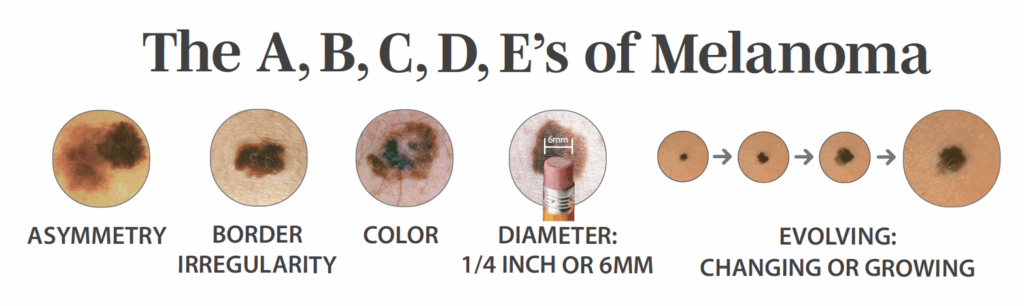
Melanoma can occur anywhere on the body, even on skin not typically exposed to the sun. It often appears as a new, unusual growth or a change in an existing mole. The “ABCDE” rule is useful for identifying potential melanomas:
Early detection and treatment are critical for melanoma, as it can spread rapidly to other organs. Regular skin self-exams and professional skin checks are essential preventive measures.
Skin Cancer Treatment Options
The treatment of skin cancer depends on the type, size, location, and stage of the cancer. This section outlines the various treatment options available for basal cell carcinoma, squamous cell carcinoma, and melanoma.
The Pros and Cons of Both Mohs Surgery and GentleCure™ SRT Treatment Options
Skin cancer treatment is not one-size-fits-all. Depending on the type, size, location, and stage of the skin cancer, treatment options may include surgical procedures, non-invasive therapies, or advanced technologies designed to effectively remove cancer while preserving healthy tissue. The best treatment plan is a personalized decision that should always be discussed with your provider, who will guide you through your options and recommend the approach that best supports your health, comfort, and long-term outcomes.
Treating Basal Cell Carcinoma
Basal cell carcinoma (BCC) treatment typically focuses on removing the cancerous tissue. The choice of treatment depends on the tumor’s size, location, and the patient’s overall health.
Common treatment options for BCC include:
- Surgical excision: The tumor and some surrounding healthy tissue are removed.
- Mohs surgery: A specialized technique that removes the cancer layer by layer, preserving healthy tissue.
- Cryosurgery: Freezing the cancer cells with liquid nitrogen.
For superficial BCCs, topical medications or photodynamic therapy may be used. In rare cases of advanced BCC, targeted therapy drugs or radiation therapy might be necessary.
Options for Squamous Cell Carcinoma
Squamous cell carcinoma (SCC) treatment aims to remove the cancer while preserving function and appearance. The choice of treatment depends on the tumor’s size, location, and whether it has spread.
Treatment options for SCC include:
- Surgical excision: Similar to BCC treatment, the tumor and some surrounding tissue are removed.
- Mohs surgery: Often used for SCCs in high-risk areas or for recurrent tumors.
- Radiation therapy: May be used if surgery is not an option or for advanced cases.
For superficial SCCs, curettage and electrodesiccation (scraping and burning) or cryosurgery may be used. In cases where SCC has spread, systemic treatments like immunotherapy or chemotherapy might be necessary.
Regular follow-ups are crucial after SCC treatment to monitor for recurrence or new skin cancers.
Melanoma Treatment Strategies
Melanoma treatment is more complex due to its aggressive nature and potential to spread. The treatment plan depends on the stage of the melanoma and the patient’s overall health.
Early-stage melanoma treatment typically involves:
- Wide excision: Removing the melanoma and a margin of healthy skin around it.
- Sentinel lymph node biopsy: Checking if the cancer has spread to nearby lymph nodes.
For more advanced melanomas, additional treatments may include:
- Immunotherapy: Boosting the body’s immune system to fight cancer cells.
- Targeted therapy: Using drugs that target specific genetic changes in melanoma cells.
- Radiation therapy: Often used to relieve symptoms or treat melanoma that has spread to the brain.
In some cases, a combination of these treatments may be used. Regular follow-ups and lifelong skin checks are essential for melanoma survivors.